Healthcare organizations are juggling more things than ever before, from rising costs and heavy administrative workloads to strict regulatory requirements. This is where healthcare BPO services make a real difference. According to Fortune Business Insights, the global healthcare BPO market is on track to jump from USD 396.80 billion in 2025 to USD 756.55 billion by 2034, making it clear that outsourcing has become a go-to solution for healthcare organizations looking to cut costs and run more efficiently.
From medical billing to patient support and IT management, healthcare providers are turning to outsourcing to streamline operations and improve efficiency. Healthcare BPO services allow organizations to focus on core clinical functions while delegating time-consuming administrative tasks to specialized providers.
In this blog, we’ll cover:
Healthcare BPO services refer to the outsourcing of non-core healthcare operations to third-party service providers. These services are built to enhance efficiency, cut costs, and ensure compliance with industry regulations.
Unlike general outsourcing, healthcare business process outsourcing services require strict adherence to healthcare regulations, data security standards, and accuracy requirements.
Examples of Outsourced Healthcare Operations
Healthcare providers adopt healthcare BPO services for several strategic reasons:
Ask any healthcare administrator what keeps them up at night, and chances are, medical billing and coding are somewhere on the list. When claims are handled correctly from the start, quicker payouts follow, fewer claims get rejected, and the revenue cycle runs the way it should.
Outsourcing puts this work in the hands of specialists who stay current with coding standards every day, taking the pressure off internal teams and reducing the kind of errors that quietly drain revenue over time. Just as other financial processes run better with the right outside support, the right billing and coding partner can make a real and lasting difference in how accurately your organization manages its revenue.
There are more financial steps between a patient’s first visit and the day their bill is fully settled than most people would ever expect, and managing all of them accurately is a responsibility that demands constant attention. Fragmented billing leads to errors, delays, and rejections that continue to pile up, which are hard to recover from, and providers feel the impact almost immediately.
That is why more organizations are turning to a structured revenue cycle management system to bring order and transparency back to the process. When paired with the right healthcare BPO partner, the results show up quickly in the form of fewer rejected claims and a cash flow that finally feels predictable.
Patient data is one of the most sensitive things a healthcare organization handles on a daily basis, and a single error can trigger compliance issues, disrupt care, or create financial headaches that take months to untangle. Outsourcing data processing ensures that information is managed with the level of accuracy, consistency, and regulatory care it deserves.
Organizations ready to tighten up their data operations will find that data entry outsourcing services offer dedicated expertise, stronger security protocols, and meaningful cost savings. It is a practical step that pays off in both efficiency and peace of mind.
Keeping electronic health records accurate, current, and secure is not as straightforward as it sounds, and one gap in the process can lead to compliance failures or disruptions in patient care that are difficult to walk back. Healthcare outsourcing services bring in skilled professionals who handle the day-to-day demands of EHR data integrity and system accuracy, making sure records are always up to date.
With threats to cloud security in healthcare growing by the day, having the right outsourcing partner in place provides an important layer of protection that most in-house teams simply cannot maintain on their own. And with security and accuracy both covered, healthcare teams can stay focused on patients rather than paperwork.
Every dictation, clinical note, and voice recording a healthcare professional creates needs to be turned into an accurate, structured document, and that process matters more than most people realize. It sits at the heart of effective communication between healthcare professionals and helps prevent the kind of documentation errors that can have real consequences for patient care.
For providers who are already stretched thin, outsourcing transcription and documentation is one of the smartest ways to save time without sacrificing accuracy. It gives clinical staff the freedom to focus on patients while knowing that every record is being handled with the care it deserves.
The way a healthcare organization communicates with its patients says a lot about the kind of care it provides, and long hold times or missed follow-ups leave a lasting impression.
Outsourcing patient communication to a dedicated call center team ensures that every touchpoint, from appointment scheduling and insurance queries to post-visit follow-ups and prescription reminders, is handled promptly and professionally.
It not only lightens the load for internal staff but also creates a more consistent and trustworthy experience for every patient who reaches out. The result is stronger patient relationships and a communication standard that is hard to maintain with in-house resources alone.
Technology is no longer just a support function in healthcare. It is the infrastructure that everything else runs on, and when it fails, everything else suffers across the entire organization. Outsourcing IT support gives healthcare providers access to specialized technical expertise, around-the-clock monitoring, and proactive maintenance that keeps everything running smoothly.
From managing electronic health platforms to defending against growing cybersecurity threats, the right managed IT services for healthcare partner ensures that systems stay compliant, secure, and operational. In today’s environment, having reliable IT support is not a luxury. It is a necessity that no healthcare organization can afford to overlook.
Hospitals and large health systems operate under growing pressure to maintain quality care while simultaneously navigating complex administrative and financial workflows. To meet these demands, many are turning to healthcare BPO services to handle critical functions such as medical billing, patient support, claims processing, and back-office administration.
By handing off these operations to the right BPO partner, hospitals can bring costs down, reduce errors, and give their clinical teams the one thing they need most, which is more time and energy for patient care.
Private clinics and small medical practices often operate with limited staff and tighter budgets, making it challenging to manage both patient care and administrative responsibilities effectively. When smaller practices hand off billing, appointment scheduling, and patient data management to the right partner, the day-to-day workload becomes far more manageable without any drop in the quality of care delivered.
By partnering with healthcare BPO providers, small clinics can access the same level of expertise and efficiency as larger institutions, enabling physicians and staff to stay focused on delivering attentive, personalized patient care.
Healthcare insurance providers handle an enormous volume of claims, policy updates, and member inquiries on a daily basis, making operational efficiency a top priority. When insurance companies outsource claims processing, policy management, eligibility verification, and customer support, things move faster, errors become less of a problem, and staying compliant with evolving regulations becomes a whole lot easier.
By partnering with experienced healthcare outsourcing companies, insurers can scale their operations more effectively while keeping administrative costs in check and delivering a smoother, more reliable experience for their policyholders.
Telehealth patients expect care that works every time they need it, and any disruption to that experience can be enough to lose their trust. Outsourcing IT support, customer service, and back-office operations gives telehealth providers the stability and responsiveness they need to keep things running smoothly.
For organizations looking to build more reliable telehealth platforms and remote patient monitoring systems, having a specialized outsourcing partner in place makes that goal far more achievable. When the operational side is handled by people who specialize in it, telehealth teams can stop putting out fires and start focusing on scaling their services and reaching the patients who need them most.
A medical laboratory is only as reliable as the data behind it, and managing that data accurately at the pace laboratories operate is a task that can quickly become unmanageable. Outsourcing data processing, documentation, and reporting to specialists ensures every detail is accounted for, from test results and patient records to compliance reports and billing.
By outsourcing healthcare services, labs can reduce back-office strain, stay on the right side of regulations, and spend less time on administrative work and more time on what they do best.
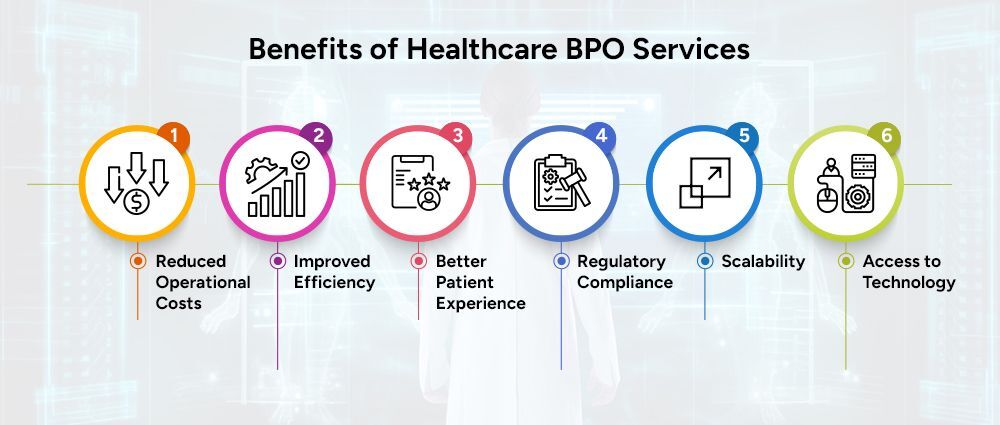
Outsourcing healthcare operations delivers a range of direct advantages that help providers operate more efficiently, smarter, and more patient-focused organizations.
Reduced Operational Costs: For most healthcare organizations, the impact on costs is one of the first benefits they get once the right outsourcing partner is in place. Fewer in-house administrative staff means reduced running costs, reduced staffing expenses, and a more efficient operation that does not compromise on the quality of service delivered.
Improved Efficiency: Partnering with people who specialize in healthcare operations means things simply run better. Faster turnaround times, fewer billing errors, and smoother day-to-day workflows are not just promises; they are the natural result of working with people who know what they are doing.
Better Patient Experience: Good patient experience is built on the small things: a call that gets answered, a follow-up that actually happens, a scheduling process that does not feel like a headache. With the right support teams handling these interactions, patients consistently receive the timely, attentive experience that keeps them coming back and builds lasting trust.
Regulatory Compliance: Healthcare regulations are constantly shifting, and keeping up with them is a full-time job in itself. Experienced BPO partners stay on top of every update, ensuring that your organization stays compliant, avoids costly penalties, and never gets caught off guard by a coding or regulatory change.
Scalability: Patient demand is unpredictable, and your operations need to be ready for whatever comes. Outsourcing gives healthcare organizations the flexibility to adjust without the stress of rushing to hire during busy periods or making difficult staffing cuts when things slow down.
Access to Technology: Staying ahead in healthcare requires the right tools, but building that technology stack in-house comes at a high cost. BPO providers bring advanced software, automation capabilities, and industry-specific tools that organizations can tap into without the burden of heavy upfront investment.
The cost of healthcare BPO services depends on several key factors that vary from one organization to another:
Rather than getting caught up in the numbers, take a step back and look at the full picture. The real value of a healthcare BPO partnership shows up in efficiency gains, fewer errors, and long-term savings that continue to grow over time.
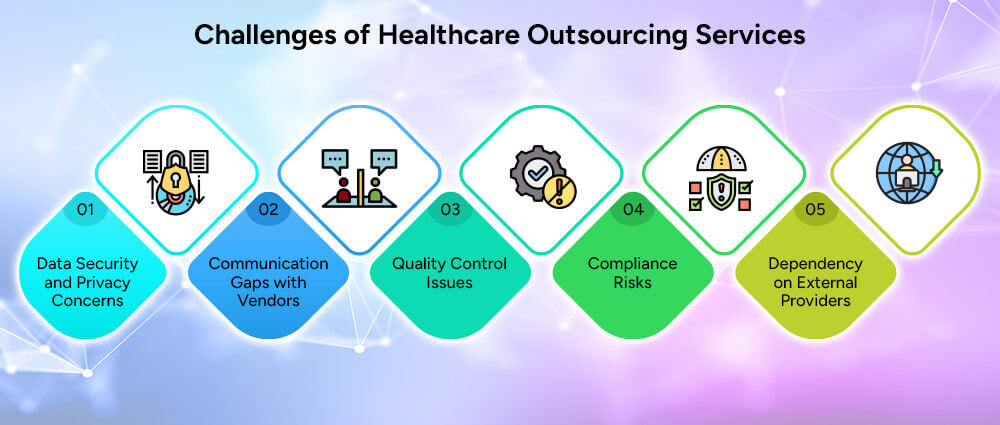
The benefits of healthcare outsourcing are real, but so are the challenges. Before locking in a partnership, here is what organizations need to be prepared for:
With proper planning, thorough due diligence, and careful vendor selection, however, these risks can be effectively identified and mitigated before they impact operations.
To maximize the benefits of healthcare BPO services, organizations should follow these proven best practices:
Finding the right healthcare BPO provider takes time and careful thought, but it is worth every bit of effort. Bring in the wrong partner, and you risk compliance failures, data vulnerabilities, and operational disruptions that can shake the entire organization. Get it right, however, and the rewards show up across the board, from better structured administrative operations to a patient experience that is genuinely better for everyone involved. When evaluating potential providers, explore professional BPO solutions and keep these key factors in mind:
The pressure on healthcare organizations has never been greater, and those that try to handle everything in-house are finding it harder to keep up. Healthcare BPO services have become a practical and proven way to improve efficiency, bring costs down, and create a better experience for patients across every touchpoint.
Whether it is billing, IT support, or patient communication, outsourcing gives healthcare organizations the room to tackle operational challenges head-on while keeping their attention where it has always belonged, on delivering quality care to their patients.
And when the right partner is in place with the right approach behind it, building a healthcare outsourcing strategy that genuinely holds up over time becomes far less of a challenge and far more of a reality. If you are ready to take the next step, get in touch with our BPO experts to explore solutions tailored to your organization’s needs.
For those looking to stay ahead of industry shifts, understanding where BPO services in the healthcare industry are headed is key, and why forward-thinking organizations are making outsourcing a core part of their long-term strategy.
BPO in Medicare refers to outsourcing administrative and operational processes related to Medicare services, such as claims processing, billing, and customer support. It helps healthcare providers manage large volumes of data efficiently.
By using healthcare BPO services, organizations can ensure accuracy, compliance, and faster processing of Medicare-related tasks.
The best solutions include end-to-end billing services, coding accuracy checks, claim submission, and denial management. These services help reduce errors and improve revenue collection.
Reliable healthcare outsourcing service providers use advanced tools and experienced professionals to streamline billing processes.
Look for providers with strong industry experience, compliance expertise, and proven success in managing revenue cycles. Evaluate their technology, scalability, and client reviews.
Choosing the right partner for healthcare BPO services ensures improved cash flow and reduced claim denials.
Healthcare BPO services take the weight of administrative tasks off providers’ shoulders, cutting down on manual errors and keeping workflows running the way they should. When the back office runs smoothly, healthcare providers can finally redirect their attention to the people they are there to serve, their patients. And the benefits do not stop there. Outsourcing also connects organizations with specialized expertise and advanced tools that would be costly and time-consuming to develop internally, making a measurable impact on day-to-day performance.

Before we begin, please solve this quick math check to confirm you're human, and you'll be all set to start chatting with our AI assistant.
Stay connected with us to receive the latest information, updates, and insights from our world of innovation.
By entering your email address you will receive promotional updates.


© 2026 ARPATECH (ADVANCED RESEARCH PROJECTS & TECHNOLOGY)