Latest Blogs
Software Development
Ramsha Khan
Jun 30, 2026
SOC 2 vs HIPAA: What Healthcare Technology Companies Need to Know
Read More...

What is Staff Augmentation? Top 5 Most Common Myths of ...
In a world where digital transformation is no longer optional, businesses of every size are under pressure to build better products, move faster, and outpace the competition. But what happens when your internal team doesn’t have the bandwidth or the specialized skills to meet growing project demands?
That’s where staff augmentation steps in.
Rather than going through the lengthy, costly process of traditional hiring or handing full control to an external vendor, staff augmentation offers a smarter middle ground. Businesses can grow their teams quickly and efficiently without the commitments of full-time hiring.
In the tech industry, the need for specialized talent can arise at any moment. From cybersecurity experts and cloud architects to QA engineers and full-stack developers, IT staff augmentation services ensure you always have the right professional ready to step in and contribute from day one.
More and more forward-thinking companies, from startups to Fortune 500s, are turning to a reliable IT staff augmentation company to fill critical skill gaps, accelerate timelines, and reduce operational risk.
According to Korn Ferry’s global talent crunch report, the global talent shortage could reach 85 million unfilled jobs by 2030, with the technology sector among the hardest hit, making flexible hiring models more critical than ever.
In this blog, we’ll cover:
Staff augmentation is a strategic approach to team management that allows businesses to hire skilled professionals temporarily for specific projects. This gives businesses the ability to reinforce their teams in the areas that need it most, without overhauling their entire workforce. Unlike traditional outsourcing, where an entire project is handed off to a third party, staff augmentation keeps decision-making, direction, and ownership firmly with the client.
Think of it as adding a specialist to your team exactly when you need one, for exactly as long as you need them.
In practice, this means you identify the skill gap in your project, engage a staff augmentation company, and onboard a pre-vetted professional (or a group of professionals) who works under your management and aligns with your internal processes, culture, and goals.
This model is particularly valuable when:
Software development staff augmentation, for example, is widely used when product teams need extra developers to ship features faster, or when startups need to build an MVP without the expense of a full-time engineering team.
Staff augmentation services refer to the end-to-end process through which a staffing or technology partner sources, vets, and places skilled professionals within your organization. These services typically include:
IT staff augmentation services, specifically, focus on technology roles such as developers, DevOps engineers, data scientists, UI/UX designers, cybersecurity specialists, and more.
A reliable IT staff augmentation company will maintain a deep talent bench across multiple technologies and time zones, giving you access to the right person at the right time, a model that pairs especially well with software development teams working under tight deadlines and shifting requirements.

Despite its growing popularity, staff augmentation is still surrounded by misconceptions that cause businesses to hesitate. Let’s break down the most common myths and set the record straight.
Reality: Staff Augmentation Regularly Proves More Cost-Effective Than Building In-House
This is perhaps the most persistent myth and one of the most incorrect. Many business owners assume that bringing in outside talent costs more than hiring internally. In reality, the opposite is often true.
When you hire a full-time employee, you’re not just paying their salary. You’re also covering:
Staff augmentation eliminates most of these expenses. You pay for the expertise you need, for the duration you need it, nothing more.
Beyond cost savings, staff augmentation also reduces risk. A reputable IT staff augmentation company maintains rigorous hiring standards, ensuring that the professionals placed with your team are genuinely qualified.
This removes the costly risk of a bad hire, which, according to industry estimates, can drain company resources well beyond what a proper hiring process would have cost from the start.
See how Arpatech helped a global IT procurement and service management company reduce operational overhead through smarter resource allocation.
Reality: You Stay in Full Control Every Step of the Way
This myth most likely stems from confusion between staff augmentation and traditional outsourcing. In conventional outsourcing, you hand a project over to a vendor and largely step back, leaving the vendor to make decisions, manage the team, and deliver a final product with very little input or involvement from your side.
Staff augmentation is fundamentally different.
Augmented professionals join your team. They follow your processes, use your tools, report to your managers, and align with your goals. You have direct communication with every developer or specialist on the engagement.
You set the sprint goals, review the work, and steer the project in the direction you choose. For a deeper comparison of how these two models differ, read our breakdown of staff augmentation vs managed services.
It is not about stepping back. It is about moving forward with a stronger, more capable team behind you.
Reality: Modern Tools and Practices Make Remote Collaboration Seamless
For many businesses, the idea of working with augmented staff across different countries and time zones raises genuine concerns about communication. The thought of managing language differences, virtual-only interactions, and varying work schedules can make the whole arrangement feel risky.
The reality of today’s workplace, however, tells a very different story. As explored in our guide on what staff augmentation is and how it can help businesses remotely, modern teams have largely moved past these limitations.
Augmented developers are fully integrated into your team’s communication stack, whether that’s Slack, Jira, Confluence, Zoom, or any combination of tools you prefer. Daily standups, sprint reviews, and async updates keep everyone aligned, regardless of geography. Explore how Arpatech’s back-office team model keeps distributed teams productive and fully aligned from day one.
What is more, experienced IT staff augmentation services providers are selective about the talent they place, specifically seeking out professionals with strong English communication skills and a genuine familiarity with Western business practices.
Many of the world’s top tech talent hubs, including Eastern Europe, Latin America, and South and Southeast Asia, produce highly skilled professionals who collaborate smoothly with global teams every day.
The secret to making it work is setting clear communication expectations from the very beginning, which a reputable staff augmentation company will help you do.
Reality: These Differences Can Actually Be a Competitive Advantage
Yes, augmented team members may be based in a different time zone. But many businesses have discovered that this isn’t a limitation, it’s an asset. In fact, the right approach can turn these differences into a genuine productivity driver, and the results often speak louder than the concern ever did.
When structured correctly, distributed teams enable near-continuous development cycles. When your local team finishes their shift, your augmented team on the other side of the world smoothly picks up where they left off.
Bug fixes get resolved overnight, features are reviewed and waiting for you by the time your morning meeting begins, cutting deployment timelines in the process. See how this played out in practice with Arpatech’s OT systems on the edge nodes case study, where distributed execution was key to delivery speed.
Cultural differences, while real, are far less of a barrier than most people expect, particularly in the tech industry, where professionals in leading outsourcing regions are deeply familiar with international collaboration norms. Nearshore staff augmentation, which involves engaging talent from neighboring or nearby countries, can further reduce time zone friction while still providing access to a broader talent pool at competitive rates.
What truly ties it all together, however, is the culture your team builds around collaboration. When respect, inclusion, and clear documentation become part of how your team operates day to day, geographic distance loses its weight entirely and stops being a factor worth worrying about.
Reality: Augmented Professionals Are Designed to Integrate Quickly
Some managers worry that augmented staff will require excessive hand-holding, slow down the team during onboarding, or create a management burden that outweighs the benefits.
The reality, however, paints a very different picture.
Staff augmentation professionals are seasoned collaborators who have worked across a wide range of client environments. This experience allows them to adapt quickly to new tech environments and workflows, settling into teams with minimal onboarding time.
Many bring highly specialized expertise that your in-house team may not have, meaning they start contributing value from day one. Explore how Arpatech delivered fast-ramp augmentation in the digital twin management case study and the automation of Azure virtual desktops engagement.
Managing them is also more straightforward than most people assume. Modern project management tools like Jira, Trello, Asana, and GitHub make it easy to assign work, track progress, and measure output across both in-house and augmented staff, with KPIs, sprint velocity, and code review processes applying equally to everyone on the team.
Ultimately, the secret to getting the most out of an augmented team comes down to how you treat them. When augmented professionals are included in meetings, given the right context, and encouraged to communicate openly, they stop feeling like outsiders and start performing like core members of your team, and the results speak for themselves.
Staff augmentation is no longer a targeted solution reserved for large enterprises or startups watching their budgets. It has become a mainstream, strategic approach to team building, one that gives businesses of every size access to world-class talent, on flexible terms, without sacrificing control or quality.
The myths we’ve explored above are understandable hesitations. Change is often uncomfortable, and the idea of integrating outside professionals into a tight-knit team can feel risky. But the evidence and the experience of thousands of companies that have embraced this model tell a different story.
When done right, IT staff augmentation reduces costs, accelerates timelines, closes skill gaps, and positions your business to compete at a higher level.
Whether you’re exploring software development staff augmentation for an upcoming product launch or looking for ongoing IT staff augmentation services to support a growing engineering function, the right partner can make all the difference.
The right talent, at the right time, can completely change the trajectory of a project. If you’re ready to close skill gaps and move faster, Arpatech’s IT Resource Allocation Services are built to make that happen, without the overhead of traditional hiring. Get in touch with an expert today, and let’s talk about what your team needs.
A flexible hiring model that allows businesses to bring skilled external professionals directly into their teams, whether for a few weeks, a few months, or the full duration of a specific project. What sets it apart from traditional outsourcing is that the client retains complete control over the project direction, management, and outcomes at every stage.
Rather than working in isolation, augmented staff become a core and connected part of your internal team, following the same processes, tools, and goals as your permanent employees. This makes staff augmentation one of the most agile and low-risk talent strategies available to technology businesses today.
Nearshore staff augmentation is the practice of bringing in augmented talent from countries that are geographically close to your own, typically within the same or similar time zones. For example, a U.S.-based company might engage developers from Mexico, Colombia, or Argentina to collaborate in near real-time.
This approach combines the cost advantages of global staffing with the logistical benefits of minimal time zone differences, making day-to-day collaboration far easier and more natural compared to fully offshore engagements. It’s an ideal option for teams that want global reach without the coordination overhead.
In staff augmentation, you bring in individual professionals or a team that works within your organization under your direct management, giving you full control over the workflow, direction, and deliverables. The augmented professionals follow your sprints, use your tools, and report to your leads, just like any internal hire would.
With managed services, however, you hand over an entire function or project to an external provider who assumes complete ownership of the outcomes and day-to-day management. Staff augmentation is ideal when you need control and flexibility; managed services work best when you want to delegate operational ownership entirely
Nearshore development involves collaborating with professionals in nearby countries who share a similar time zone, usually within one to three hours of your own, making daily standups, real-time reviews, and collaborative problem-solving feel natural and connected. It’s the preferred choice for teams where communication cadence and cultural alignment matter most.
Offshore development, on the other hand, means working with teams that may be many time zones away, where the biggest advantage is typically a lower price point. If smooth collaboration and cultural familiarity are priorities, nearshore is the better fit. But if budget efficiency is the primary driver and real-time availability is less critical, offshore staff augmentation can deliver strong results without stretching your budget.
Umair Ahmed
Jul 15, 2020

Shopify vs Woo Commerce: Which one should you go for?
With the availability of multiple feature-rich ecommerce platforms, initiating an online store has become quite convenient. But at the same time, it is quite confusing to pick the best one. Deciding which one to go for is dependent on what you are looking for. Shopify and WooCommerce are the most renowned e-commerce platforms, allowing anyone to set up an online store and sell their products. Below, we are going to compare Shopify and WooCommerce and help you decide which one you should go for.
WooCommerce gives you the access to get hold on the most robust content management system and employ it to run an online store. It is an open-source platform where you can customize each feature of your online store.
WooCommerce is a WordPress Plugin which offers free core plugins. Apart from that various add-ons are also available out of which some are paid while others are free.
WooCommerce has multiple features to offer:

The developers of WooCommerce are familiar to the worth of design in eCommerce which is the reason they offer WordPress themes that have been specifically optimized for WooCommerce. The specialty of WooCommerce is that it is highly compatible with WordPress when comes to the rich theme selection.
WooCommerce themes proffered on Envato Market have been specifically customized for the plugin itself. Not just this, it also offers various other features like zoom in facilities, attractive sliders, bold imagery and a very receptive design and other top-level aesthetics.
Since WooCommerce is a WordPress plugin, there are multiple SEO benefits to consider. WP is popular for content essentially and inhibits great SEO capabilities. So, when you place both together, you can assemble both content and information which brings the opportunity of high search engine ranking. Apart from that, WP holds blogging in an adequate and logical way along with the archives and categories which it offers.
WooCommerce facilitates its users with free basic features in the core plugins. They are the best to begin with. If you desire to magnify your online store’s prospective, you will naturally choose WooCommerce extensions.
WooCommerce provides many interesting options which allow you to raise your scale, such as selling on Facebook, instinctively record sales in QuickBooks, connect your store with MailChimp, creating repeated subscriptions and a lot more. Some add-ons are paid while others are free.
With a widespread community of users along with developers whose emphasis is to refine and extend WooCommerce through the development of themes and add-ons for it. It offers reliant ecommerce development service along with thorough documentation. Due to which it becomes convenient to find help and chances are that the solution to your problems already exist there.
Although WooCommerce has a lot of free stuff but there are some payments attached to it. For instance, for a WordPress website you need to buy your own domain name and setting up a hosting plan. The cost varies since it is all dependent on the hosting plans you prefer and the add-ons you desire to pick for your online store.
Shopify is an e-commerce platform which has brought convenience to the creation of an online store, accepting payments and managing inventories. Without the worries of handling technicalities like security, web hosting etc.
Shopify is a self-hosted solution but unlike WooCommerce, Shopify offers no free plans but the costing is manageable. This self-hosted solution makes your store ready in a matter of minutes because there is no supplementary software to install. Just like WooCommerce, there are variety of themes as well as add-ons offered by Shopify which beautifies your store.
Shopify’s main feature includes:

Although, Shopify is not that much of a feature rich like others. It provides a good collection of themes to begin with. Its themes range from free to paid. If you wish to add extra features, Envato Market provides an excellent selection of popular yet affordable Shopify themes. Its themes offer features such as zoom in facilities, quick view options, newsletter, look books, social sharing, huge-menus and a lot more than these. You have a wide variety of multipurpose themes to opt for.
Shopify development Services has devoted servers which caters purely to Shopify stores. Its overall performance in minutely better as compared to WordPress. It has integrated SEO features like image optimization, tags, alt, defining titles and product descriptions. Another plus point is that SSL certification comes with every plan of Shopify without any charges.
Shopify provides a great collection of free features. These features contain discount codes, cart recoveries, Facebook selling, the capability to offer gift cards, and lots more. Just like WooCommerce, Shopify facilitates unique add-ons which gives you the ability to cross-sell, track deliveries and others.
Shopify offers an in-depth documentation and a vibrant community. When compared, WooCommerce support comes majorly from the community, whereas Shopify has a very devoted team which is available 24/7.
Shopify offers various degrees of pricing plans ranging from lowest to highest. It also offers a 14-day free trial so you can decide whether to go for Shopify or not. All the plans include limit free products and bandwidth, a blog, free SSL certification. Domain name can be directly bought from Shopify and even you have the flexibility to connect with existing domain name. Final cost will be defined on the basis of the add-ons and features you have bought.
Both Shopify and WooCommerce are dominant eCommerce platforms. It is a very close comparison. Both are feasible choices for initiating your online store in a quick and smart way.
Apart from being easy to use and feature-rich, both platforms facilitate a number of options when it comes to visual appearance of an online store. They are suitable for a wide variety of industries and are guaranteed to make your page noticeable to the users.
Saima Naz
Jul 9, 2020

Instagram Trends to Watch for in 2020
Instagram has been constantly evolving as a social media platform and has brought some of its peers to the ground. It’s safe to say that the platform is no longer a parochial social media app, but a comprehensive platform of growing rates of engagement.
Aesthetic trends are constantly evolving in Instagram — but what does the feed hold for 2020? The Instagram feed is about to become more creative than before, from the “no-edit edit to home-made videos and the obsessed with carousel posts.
Whether you’re a brand, business or influencer, we’re highlighting the best Instagram aesthetic trends and predictions you’re going to need to understand for 2020. To help you stay on top of those changes as a marketer, we’re touching on a few Instagram trends that defined 2019 and bringing you some trends to expect in 2020.
Instagram has, over the past couple of months, been one of the go-to video marketing platforms for video marketers. Over the next few years, having an all-new and improved IGTV platform will also cement its position. The updated IGTV platform now allows people to promote their videos across their feed. Thus, Instagram is no longer just for stills, so its video-sharing platform IGTV has evolved. It was quite a rough start for IGTV that led to slow acceptance by users, but IGTV has been improved by Instagram and is actively promoting its use across the platform.
IGTV also reflects its competitor not only with the interface look and feel, but also with how users interact with it. More users are also encouraged by Instagram to explore IGTV by getting one-minute snippets on the feed that will direct a user to the IGTV tab to start the video. As such, people are browsing more and more on the tab and it would be prudent for brands to start posting their content on it. Instead of being confined to IGTV, users can now cross-promote their IGTV videos on their feeds and have recently allowed users to share landscape or horizontal videos rather than just vertical ones.
When using IGTV, you can choose to go for a more “authentic” and “unfiltered.” You can, for example, share insightful interviews with experts, influencers, or just a scene from any of the trending events you are taking part in.
Even though some pages post updates on a daily basis, we see a shift from the post grid to stories in particular. Posts are becoming more curated more purposeful and more minimalist. They carry on an evergreen image and leave the stories with the real-time fun stuff. The reason for this is simple: there is an incredibly high engagement to stories. Postings remain for business information. On the other side, stories are intended to be a keep-tabs-on-the-brand emphasis, with dynamic stickers and swipe-to-see-more links choices.
This feature is available for personal Instagram accounts as well as business Instagram profiles, and is a brilliant way to cross-promote your content so you can attract a broader audience. Instagram also has so many great features within the stories to take full advantage of. You can make your story attractive by adding music, animated stickers, locations, polls and more.
More and more marketers have shifted their focus on story content rather than feed content, and you ought to do the same.
Modifications in Explore Tab
The Instagram Explore tab curates content and links you with posts based on your past likes and interests. It used to be generic in the past, but since interest has recently been segmented, you can now move to the Explore tab for content you are interested in.
Instagram continues to make finding new accounts easier for users to follow, which is a great thing for your brand. Every day, more than 200 million users visit the Explore page, allowing even more people to see your brand.
The content on the Explore page of each individual user is directly addressed to their app activity so you need to ensure that you are marketing properly to your customers if you are hoping to find space in the Explore section of your target customer.
For brands on many platforms, interactive content is pretty good right now; not just trends on Instagram, but the platform makes it incredibly convenient for you to jump on the bandwagon.
Instagram Stories provides functions such as polling, quizzes, questions and more to grant the followers the opportunity to interact with you and your content directly.
To incorporate interactivity in your Instagram story, open the Stories dashboard, take a picture or upload your content, then tap the stickers icon to view all your content choices.

It’s a cool way to get all the thoughts and opinions of your audience. You can add interactivity just for great entertainment, or you can use it for market research strategically and collect ideas for future products, services and launches.
Instagram no longer has anything to do with the flawless photos and hyper-curated feeds. It’s becoming more about real life, and what things really look like. 2020 is all about being real, authentic and unfiltered content.
To build a stronger connection to your audience, a high level of authenticity can go a long way. Your brand will be more directly relevant to your audience when you can showcase the good with the bad, the struggles with the wins. You can be authentic by getting creative and diverse and use untouched models in your product photography. You may also intrigue users by showing them behind-the-scene content showcasing life of a social media manager, a CEO or any other roles in your company.

You can draw inspiration from Humans of NY which is among the first of its kind and has persisted over the years due to the realistic photos of people with compelling stories. Of course, you don’t have to replicate the whole idea but you can get a clue to start a new social media campaign.
Influencers on Instagram are still a big deal– so we think it’s going to continue to be so for a while. The app places more power in them with the influencers’ growth already going strong. And followers flooding influencer DMs with “where would you get that?’’ on their OOTDs. Instagram recently announced that they are pushing out an influencer shopping option.

To make a purchase, users rely on and trust influencers to figure out the many market products and services and provide endorsement. Instagram allows influencers to tag products to encourage users to jump straight into brand product accounts.
Many influencers may have as few as 100 followers, but brands have continued to value partnerships with them as getting their message across this way is now considered more authentic. They draw more attention and respond to comments and mentions are more prospective. In fact, these influencers have origins in niches that are hard to reach. Therefore, you will broaden your advertising reach by working with them.
Saima Naz
Jul 6, 2020

5 Python Web Development Frameworks For 2020
Frameworks play an integral role in making Python programmers’ lives’ easier: they reduce development time and allow developers to focus greatly on application logic by automating the application of unnecessary tasks.
There’s no shortage of frameworks for Python as it’s one of the top programming languages. Since different frameworks have their own unique merits and demerits, the you need to choose one based on project requirements and developer preference.
Here are 5 leading Python web development networks for 2020.
Written in Python, Django is a well-liked, widely-used, and an open-source Python web development framework that is, most of the time, accompanied by ready-to-use libraries. Some of its outstanding aspects are the routing of URLs, the template engine, authentication, database schemas migration, and an object-relational mapper, making this framework enormously fast, extensible, and flexible. Django also conforms to a number of databases and employs ORM to chart objects to tables in databases. Nevertheless, this framework helps you build any application you are seeking, from small to large web applications.
This is another open-source system, which runs on Python 3 and is considered to be the least complex to achieve as much as possible. The best aspect of this framework is that it can run on both small and large applications. Some of the main features of Pyramid include flexible verification and authorization, consent, and single-document application. The system provides adequate security measures and supervision through control documents, while the charting of URLs to code is also commendable.
If you wish to create high-security and steady web application, however, then you would do well to hire a developer from Python.
This is an open-source, widely-used web development framework, which allows the user to design things very rapidly and effectively, while supporting all acquainted working structures. With the help of SQL database, web server, and an online interface, this framework helps to reorganize the Web application development procedure. Nevertheless, with the assistance of internet browsers, Web2py also lets users change, produce and manage web applications.
One of the significant features of this system is that it employs the ticket that allows the instrument to supervise the status and the slipups. The framework has sections in made-up to handle replies, conferences, HTTP requests, and treatments.
Created as a full-stack layer, this framework is now an autonomous web framework that can work either as a full-stack frame or as a micro-frame. TurboGears is built on MVC where the controller sends the application to an assortment of the controller’s exposed actions. This framework offers all the functionality one needs during the formation of a web application in its full-stack mode.
Certified under the LGPL, this is a semantic web application framework which allows developers to build Web applications resourcefully by reusing elements and adopting the popular object-centric design ideas. Some of the key features of CubicWeb include:
Saima Naz
Jul 1, 2020

5 SEO Hacks for Small Businesses in 2020
Small businesses are usually on a tight budget yet they want to be on the top of every relevant search result. For your website to rank on any search engine, you must perform proper SEO.
Irrespective of size, most companies find SEO a cumbersome exercise. But this becomes especially difficult when you have limited money, time, and other resources.
Great organic ranking does not happen overnight. However, there are 5 hacks you can focus on to start moving the needle for your small businesses.
You don’t necessarily need a coterie of SEO experts to monitor the performance of your website. There are many free programs out there, such as Google Analytics, that will track the performance of your website.
This tool can enable you to see which search queries and landing pages will help attract web traffic from the search results. With this information, you can tweak your SEO strategy accordingly.
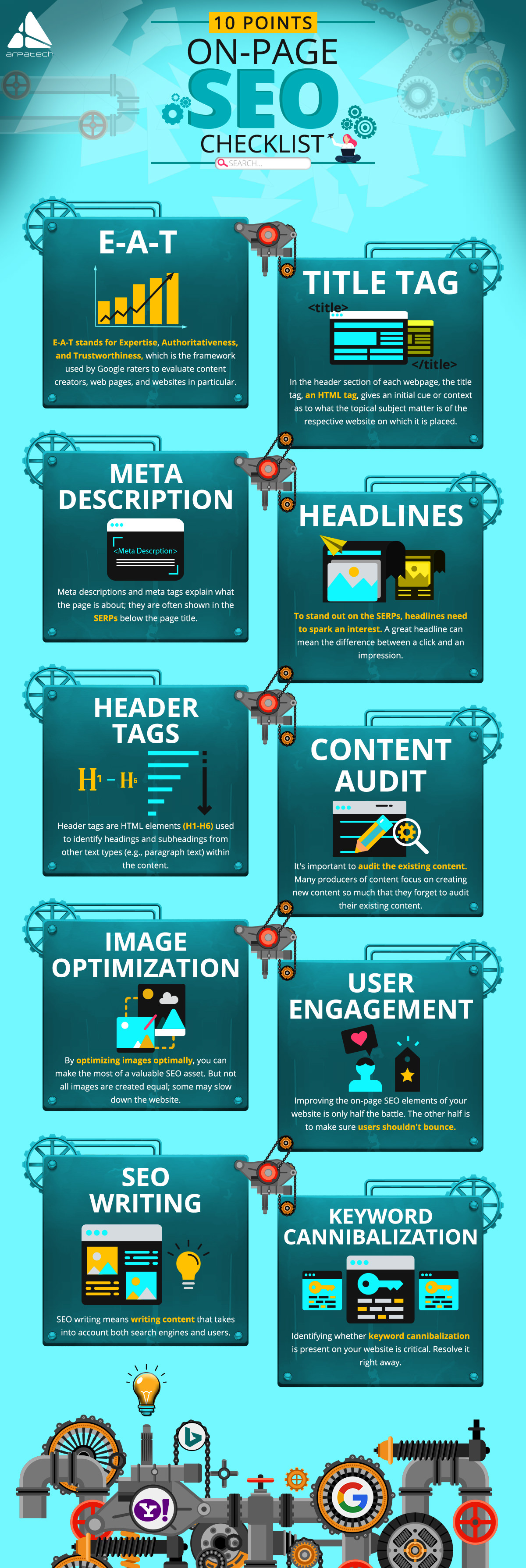
Meta tags like the title tags and meta descriptions in your website’s backend are critical to update when you create web pages, as it helps search engine crawlers to recognize the web page’s content and validate you as a reliable source of information.
The title tag and meta description are there to reassure online searchers that your content is exactly what they’re looking for.
Here are some definitions to help guide you through:
Allow, interact and engage with comments on the page.
This is because it’s a great SEO opportunity, among other reasons.
Commenters often leave information that you may have missed, and post visibility increases with conversations, comments and shares.
Google’s search algorithms are all about discerning content of high quality from contents of low quality. In Google’s eyes, high-quality content is informative, authoritative and has a good reputation elsewhere on the web.
Therefore, it is important to make other sites link to your website. There are opportunities to do so but a lot of it isn’t in your reach. What you should do, however, is to embed insightful links into your content of reputable websites. This means that your content is informative, well-cited, and, therefore, of a high quality in Google’s view.
You need to monitor the accuracy of your local business data, in addition to Google My Business.
Consistency is pivotal
Data aggregators (e.g., Neustar Localeze, Factual) exchange local business information, including the name, location, and telephone number (NAP).
Make sure the NAP information is consistent and accurate for your business. Local business listings and quotations (i.e. online mentions of a business) can actually boost your local presence.
The simplest option to local directories and citations is to sign up for a service that distributes your business’s NAP information.
Saima Naz
Jun 19, 2020

What is Facebook Pixel: How to Optimize Social Media Ca...
Facebook Pixel is a business tool for Facebook It can monitor conversions on your website as a part of your Facebook Ads, target different audiences, and give insight into how users engage with your content.
The Facebook Pixel is a piece of coding that you position on your website, enabling you to analyze sales from Facebook ads, automate advertising, build targeted audiences for potential ads, and target people who may have already connected with your website. The Facebook Pixel functions by dropping a cookie that will record visitors to your website so that they can be reached afterward, often known as retargeting.
When you advertise for people who have been on your website, you could also include the Facebook Pixel to monitor their conduct when they get back on your website. That, in addition, lets you find out what ads are most successful, thus allowing you to reach audiences with increased relevance.
Of course, yes, For the following reasons,
You can develop and execute the Facebook Pixel from the Ads Manager


Note there’s only one Facebook Pixel per account and you can always add multiple Pixel in events on different types of pages. Use the Pixel Helper, a tool that helps you verify your Facebook Pixel. With the help of this tool, you can test if your Pixel is working properly, solve basic problems, and learn how to improve performance.

When your pixel is created what you need to do is follow a little more step to get everything fully set up. These steps depend on your role and your understanding of the back-end of the website.
You need to send the installation instructions to him or her. This is done easily by navigating to the pixels tab in your Ads Manager, selecting Set up Pixel” and then “Email to Developer Details about how to install the pixel would be sent direct to the email addresses you choose when you press “Send.”
If you’re trying to install the Facebook retargeting pixel on your own, first, you’re going to have to find the header code for the website. Then copy and paste the code to the bottom of the header above the closing tag.
Then finally to make sure your Facebook retargeting pixel works, press the Send Test Traffic” button and wait a couple of minutes. If you don’t get any response check to make sure you have configured your pixel properly. But if you are still having trouble, please contact Facebook support.
After you’ve completed the procedure, your pixel will be ready to go. And if you want to, you can power it up to do even more.
Facebook Pixel offers a variety of useful information to business owners and marketers alike. You can use this to see what Facebook captures for visitors to your website.
Now with all the hard work of setting up your pixels is done, it’s really easy to use and reuse them in your future Ads. And as long as your pixels are set up on the right pages, you’ll be able to monitor traffic, conversions, and audiences that benefit from your Ads and boosted posts.
Facebook ads can be highly lucrative and generate a substantial amount of quality traffic if pixels are properly set up, implying they are as much targeted as possible and carefully monitored. You can also make use of social media marketing tips for better conversions.
Saima Naz
Jun 15, 2020


Before we begin, please solve this quick math check to confirm you're human, and you'll be all set to start chatting with our AI assistant.
Stay connected with us to receive the latest information, updates, and insights from our world of innovation.
By entering your email address you will receive promotional updates.


© 2026 ARPATECH (ADVANCED RESEARCH PROJECTS & TECHNOLOGY)