Buying or selling property involves far more than signing an agreement. Real estate transactions can involve large amount of money, sensitive personal documents, multiple parties, companies, agents, and complicated ownership structures. For a real estate business, knowing a customer’s name is not enough. It requires confidence that the person is genuine, the documents are legitimate, and the parties involved have the right to participate in the transaction.
With so much depending on the identity of the people involved, real estate businesses need a verification process they can rely on. KYC software helps manage this process digitally, from collecting customer details and checking identity documents to screening databases and maintaining records. Custom software development services can help integrate these verification processes with the systems a business already uses.
A reliable verification process also helps address one of the bigger risks in real estate: money laundering. The Financial Action Task Force notes that real estate is frequently used for money laundering, with risks often linked to corporate vehicles, complex financing arrangements, and hidden ownership. For real estate professionals, these risks make careful customer verification an important part of the process.
Key Takeaways:
What We will Cover:
Know Your Customer, commonly called KYC, is the process of identifying and verifying a customer and understanding enough about them to meet applicable compliance requirements. In real estate, this can apply to buyers, sellers, landlords, tenants, investors, developers, corporate clients, agents, intermediaries, and other parties involved in a transaction.
For an individual, the information collected may include their full legal name, date of birth, residential address, contact details, government-issued identification, passport, or proof of address. These requirements may change depending on the location, transaction, customer type, and relevant laws.
For a company, the process can go further. A real estate business may need company registration details, business information, authorized representative details, and information about the individuals who own or control the entity.
This is why KYC is more than collecting documents. KYC identity verification requires the business to establish whether the information is authentic, consistent, and sufficient for the relevant compliance process.
A well-designed KYC software workflow can bring this information into one place, reducing the need for staff to collect and verify every piece of information manually.
The way real estate transactions are structured can make fraud and financial crime harder to detect. Properties often involve large sums of money, several parties may be involved in a deal, and ownership may sit behind companies or other legal entities.
One of the risks that comes with these transactions is identity fraud. An individual may try to take part in a deal using someone else’s identity or altered documents. While manual verification can identify basic issues, more advanced fraudulent attempts cannot be identified manually.
The problem is not limited to false identities. False or changed documents can be used to mislead businesses during a transaction. Without proper verification, these documents may be accepted, allowing the person to move further into the transaction before anyone notices the problem.
Checking documents is only part of the process. Hidden ownership can also make a transaction difficult to assess, especially when a property is held through a company or another legal entity. The person handling the deal may not be the one who actually controls or benefits from the property.
These risks can affect more than the transaction itself. A real estate company linked to a fraudulent or suspicious deal may face financial losses, regulatory scrutiny, and a loss of customer trust.
That is where KYC software can help. It does not remove these risks, but it gives businesses a more organized way to verify customers, check documents, and manage the information involved in each transaction.
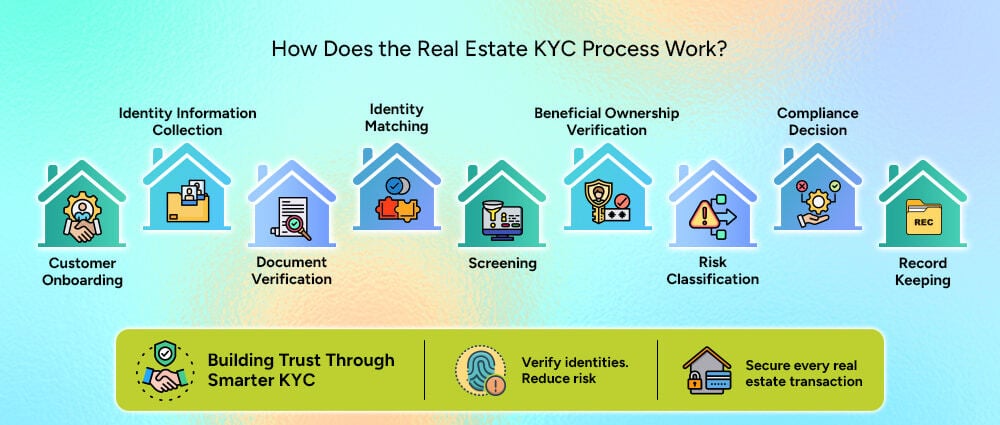
A good KYC process should be structured around the company’s customer journey rather than treated as a separate administrative task.
To start an application or transaction, the customer provides the needed information for verification. Digital forms can help users fill out the required fields and reduce incomplete submissions.
The business collects relevant information such as:
The KYC software can organize this information and pass it to the next stage without requiring employees to re-enter the same data.
After the customer submits a document, the system checks the details to make sure everything is in order. This can include the document type, expiry date, validity, and signs of alteration. OCR can also read the information on the document and reduce manual data entry.
After checking the document, the system makes sure it belongs to the customer. It can compare the customer’s face with the photo on their ID and check that they are a real person, not a photo or recording.
The system can check customer information against sanctions lists, PEP databases, watchlists, adverse media sources, and other relevant databases. If a match is found, the business can review the customer before moving forward.
When the customer is a company, the business needs to know who is behind it. This is important when the company is buying, selling, or holding a property.
The information collected can be assessed against predefined rules to determine whether a customer presents a low, medium, or high level of risk.
After the verification and screening checks, the business can decide how to proceed with the customer. The result may be an approval, a request for additional information, a manual review, or a rejection or escalation.
Businesses need to keep a record of the checks carried out during verification. This can include documents, screening results, decisions, timestamps, and actions taken by reviewers. The records should be stored securely and kept as long as required.
This makes KYC software useful beyond checking a customer’s identity. It also helps businesses keep track of what was checked and what happened during the process.
Manual KYC may work when a real estate business handles a small number of customers. Problems usually appear as transaction volume increases.
An employee may receive an ID by email, download it, check the document, enter the customer’s details into another system, perform separate database searches, record the outcome in a spreadsheet, and later search through emails when someone asks for the verification history.
When these tasks are handled manually for hundreds or thousands of customers, they can become difficult to manage. Businesses may face problems such as:
The problem is not necessarily that employees cannot perform these tasks. It is that repetitive processes consume time and create more opportunities for inconsistency. KYC software can take care of routine checks, leaving employees to focus on cases that need a closer review.
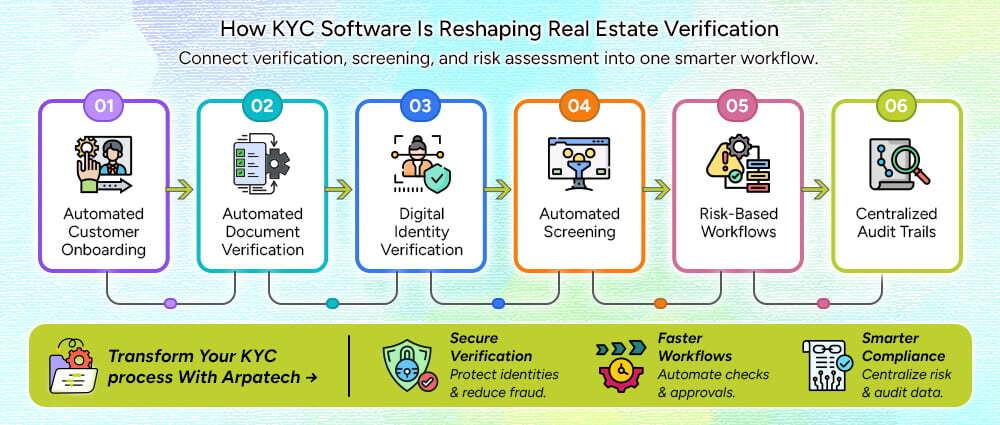
The strongest use of KYC software is not simply replacing a manual ID check. It is connecting several verification activities into one workflow.
Digital onboarding forms can collect information based on customer type. A buyer, corporate investor, or tenant can be presented with the fields and documents relevant to their situation.
Document recognition and OCR can extract information from IDs and supporting documents. The system can then compare that information against the customer’s submitted details and flag inconsistencies.
Identity verification services can be integrated into the workflow for facial matching, liveness checks, and other digital verification methods.
APIs can connect the platform with appropriate sanctions, PEP, watchlist, and adverse media providers. Instead of employees performing each search separately, results can flow into the customer’s case.
Rules can be configured to determine what happens next.
For example:
Low risk → automated approval
Medium risk → additional information
High risk → compliance team review
This approach helps teams spend their time on cases that require their attention.
Each verification case can have a record of the information submitted, documents checked, screening results, reviewer actions, and final decision. This gives the business a clear record of what happened during the verification process. This creates a much clearer history than scattered emails and spreadsheets.
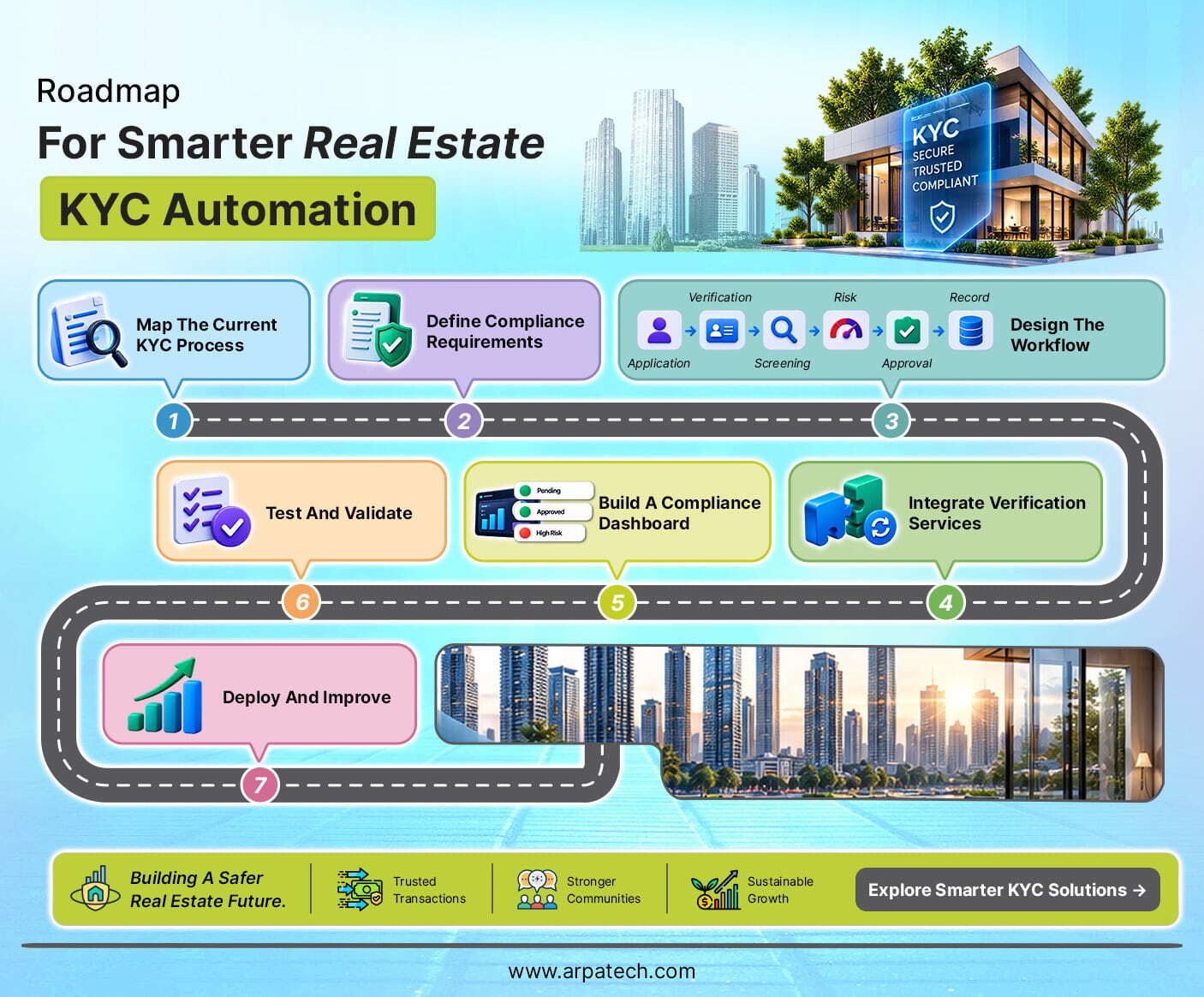
Building KYC software should begin with the existing business process, not with technology.
Start by documenting how a customer moves from application to approval. Look at the information and documents collected, the checks carried out, and the people involved at each stage.
Going through these steps can help you find unnecessary work and decide where automation would be useful.
Make a list of the rules that apply to the business and the customers it deals with. Note what information and documents need to be collected, which risk checks are needed, how long records should be kept, and when a case should be sent for further review.
The software should be built around these rules. It can help apply the company’s compliance process, but it should not make its own legal decisions.
Map the complete journey:
Application → Data Collection → Identity Verification → Screening → Risk Assessment → Review → Approval → Record Keeping
The goal is to make every stage clear, including what happens when a check fails.
Depending on the business model, integrations may include:
The technology partner should design these integrations around the company’s workflow rather than treating each service as an isolated tool.
Compliance teams need visibility into what is happening.
A dashboard can show:
This gives the team a quick view of the cases that are still in progress or need action.
Run different cases through the workflow, including incomplete applications, failed documents, identity mismatches, wrong alerts, risk cases, API failures, and manual decision changes. Review the results and see if anything needs to be changed. Make those changes before the workflow is put into use.
After testing the workflow, launch it. Monitor how long it takes to verify, how many customers complete the process, how often incorrect alerts occur, and how many cases need a manual review. Also, check for any compliance issues during this process.
Review what you find and make changes where the workflow is slow, causes problems, or needs more automation.
Selecting a technology partner is about more than finding a platform that can verify an ID. Look for a partner that can provide:
The partner should also understand that every real estate business has different customers, systems, risk policies, and operational processes.
The right KYC software should fit into that environment rather than forcing the business to redesign everything around a rigid platform.
KYC should not be treated as paperwork that simply needs to be completed before a property transaction can move forward. Done properly, it gives real estate companies a clearer understanding of who they are dealing with and creates a structured way to manage identity and transaction risks.
The right KYC software handles the main verification tasks in one place, from checking identities and documents to screening customers and reviewing risk. This makes the process easier to manage and gives teams a clear view of each customer’s verification status.
KYC helps real estate businesses verify who they are dealing with, but customer verification is only one part of financial crime compliance. Firms also need to understand transaction risks, identify suspicious activity, and take the right action when something looks unusual. This is where AML compliance becomes important.
If your real estate business still relies on disconnected tools or manual verification, Arpatech can help you build a secure, scalable solution around your existing workflows. Discuss how an automated KYC workflow can fit into your business.
Choose KYC software that keeps data secure and fits the way your business handles verification. It should connect with your existing CRM and compliance tools, while giving your team the ability to review risky or unusual cases.
Identity verification software checks a customer’s ID, matches their face with the photo on the document, and checks if a real person is present. The verified information can then be sent to the KYC software for screening and risk checks.
Automated KYC systems can help spot missing information, document issues, identity mismatches, and screening alerts during verification. Cases that need more attention can then be sent to the compliance team for review.
KYC software gives businesses a simpler way to check who they are dealing with and whether there are any risks involved. In real estate, this matters because a single transaction can involve large amounts of money, several people, and companies that may hide who owns the property.
In 2026, software needs to do more than handle basic tasks. It should be secure, scalable, and able to support automation, AI, and real-time data. For businesses handling customer information, KYC and AML compliance should also be part of the software.
Yes, the same KYC software can handle both individuals and businesses when it includes KYB capabilities. For businesses, it can check company information, documents, ownership details, and identify the UBOs behind the company. It can also help businesses understand more complex ownership structures.

Before we begin, please solve this quick math check to confirm you're human, and you'll be all set to start chatting with our AI assistant.
Stay connected with us to receive the latest information, updates, and insights from our world of innovation.
By entering your email address you will receive promotional updates.


© 2026 ARPATECH (ADVANCED RESEARCH PROJECTS & TECHNOLOGY)