Like all industries in this world, the healthcare industry in the UAE is in the process of rapid digital transformation. Popularized by technologies such as electronic health records (EHRs), connected medical devices, and cloud-based systems, most medical clinics are now increasingly introducing high-level information technology into their organizations. These innovations improve efficiencies and patient care, but they introduce new and serious cybersecurity risks.
Now, all-sized medical clinics are major players in handling large volumes of sensitive health data. Patient history, insurance details, diagnostic images, and billing information are only a few of the vast amounts of information that have made the health sector a prime target for cybercriminals. In this context, cybersecurity solutions for healthcare should be considered mandatory rather than optional.
Cyber attacks have evolved, and healthcare organizations have become significant targets for cybercriminals because they process highly sensitive data. Patient records contain information such as names, national identification numbers, medical history, and financial data, which can make individuals victims of crimes that arise once this information is misused or sold on black markets.
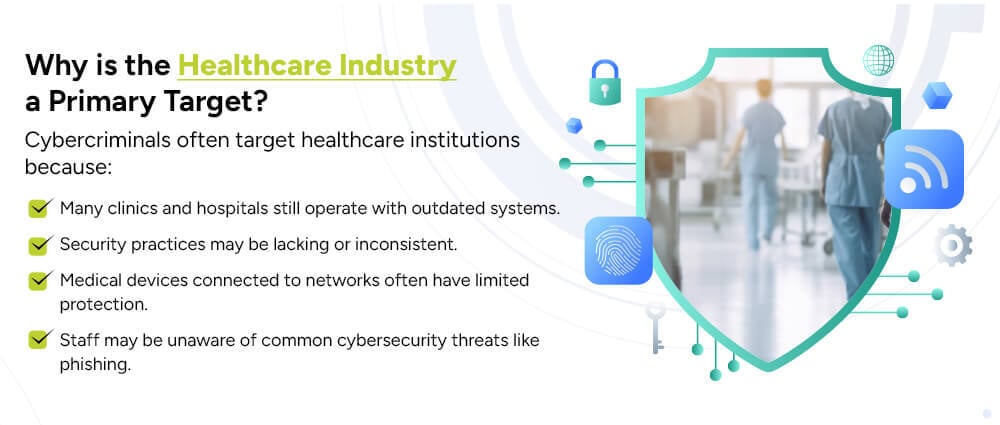
The rapid adoption of digital tools and success with big data platforms in the UAE, where the healthcare sector is growing dangerously fast. This makes the need for comprehensive cybersecurity solutions for the healthcare industry even more urgent.
Big data is radically transforming healthcare in UAE in its own way: enabling clinics to enhance diagnosis, track patient outcomes, and personalize treatment. However, without strong cybersecurity measures, big data migration exposes sensitive information to potential misuse.
Medical clinics regularly face the following challenge:
Proper protective measures are completely absent when data travels between systems, allowing a hacker to compromise the transfers. Sensitive patient information is exposed during these transfers.
When every individual in the healthcare organization is granted full access, there is a high risk of accidental and deliberate misuse of data, and the need to limit access strictly to those who require it.
Simple password protection cannot do the job anymore. Systems with weak resident login protection are easily compromised, endangering patient records.
Threats can go unnoticed without continuous monitoring, and damage may already have been done. Real-time monitoring helps nip unlawful activity in the bud.
To tackle these risks and issues, healthcare cybersecurity providers should focus on the following strategies to improve cyberattack threats and malware detection:
Encrypting data from the moment it’s generated until it reaches its end client ensures that the data is unreadable even if it’s intercepted en route.
RBAC limits who can view or edit data based on their job function, thereby minimizing the risk of unauthorized access.
These AI and machine learning systems would identify abnormal behavior or attacks before they cause harm.
Regular reviews of systems and practices help keep security up to date and ensure compliance with health data regulations.
In the UAE, even small to mid-sized medical clinics must guard against growing digital threats. Fortunately, there are affordable and effective solutions tailored for healthcare environments.
Encrypting patient data in storage and during transmission adds a layer of protection that secures data management against theft and tampering.
These tools act as digital gatekeepers, blocking viruses, preventing unauthorized users from accessing clinic systems, and blocking malicious software.
2FA improves login security by adding an extra verification step, for example, a code sent to a mobile device, along with your password.
Clinics should use protected Wi-Fi with limited access points. A segmented network can keep medical devices and admin systems separate for added security.
Staff should be trained to recognize phishing attempts and other scams. Awareness is key to preventing human errors that lead to breaches.
Frequent backups ensure that data can be quickly restored in case of a ransomware attack or accidental loss, helping clinics get back on track.
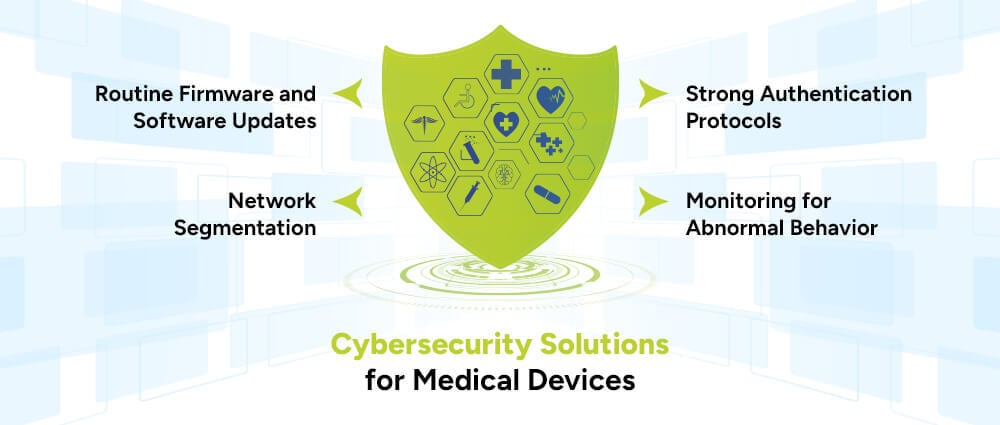
With more smart devices being used in clinics, like ECG machines, insulin pumps, and patient monitors, cybersecurity is required to protect these tools as well from malware and data breaches.
Keeping device software updated closes security loopholes and protects against known vulnerabilities.
Medical devices should require secure logins to prevent unauthorized access, especially when connected to networks.
Separating medical devices from the rest of the clinic’s network helps isolate potential breaches and limits access to critical systems.
Monitoring device activity prevents unauthorized access or unusual patterns of behavior from being caught early and quashed quickly before damage occurs.
Well, hospitals can secure patient health and the continued performance of their daily services by securing their medical devices.
One must take a proactive and layered approach to combating cybersecurity threats. Medical clinics should also focus on assessing their vulnerabilities and developing tailored solutions for both technical and human factors.
Steps to improve healthcare IT security include:
UAE is employing robust regulatory frameworks as time goes on and as cyber threats increase. They are serious about protecting patient data at all costs. Medical clinics that follow all of these restrictions and regulations not only avoid penalties but also garner their patients’ trust and build a strong reputation for themselves.
Cybersecurity is more than just a defensive strategy; it is also a growth enabler. By investing in healthcare cybersecurity solutions, medical clinics in the UAE can:
With the UAE’s national initiative toward smart healthcare, clinics that prioritize security are well-positioned to grow, innovate, and collaborate with both government and private stakeholders.
Cybersecurity is no longer a back-office concern; it is front and center to the success and integrity of modern medical clinics. In the UAE’s rapidly evolving healthcare landscape, adopting robust cybersecurity solutions for healthcare is essential for safeguarding patient trust, ensuring compliance, and unlocking future opportunities.
Medical clinics that prioritize cybersecurity today are building a smarter, safer, and more resilient healthcare system for tomorrow.
Cybersecurity is no longer some back-end support; it has become front and center to the core success and integrity of modern medical clinics. In the rapidly evolving healthcare industry in UAE, implementing robust cybersecurity solutions for healthcare in place to enable the safeguarding of patient trust, ensure compliance, and unlock opportunities. If you are struggling with small data breaches here and there, or are thinking of opening a medical clinic, our recommendation would be to contact a qualified cybersecurity company, like Arpatech, to stop any malware intrusion or data breaches in the future. This way, you can succeed in healthcare and gain your patients’ trust without hassle!
Medical clinics that focus on cybersecurity today are indeed building a smarter, safer, and more resilient healthcare system for tomorrow.
Cybersecurity in the medical industry refers to protecting healthcare data, systems, and devices from cyber threats. It involves implementing technologies and policies that secure patient records, clinical systems, and connected devices.
The major threats include:
Here are some solutions to use if you want to avoid data breaches in healthcare:
A widely known example is the WannaCry ransomware attack in 2017, which disrupted the UK’s National Health Service (NHS), affecting hospitals, clinics, and emergency services. It highlighted the global importance of securing healthcare systems.

Before we begin, please solve this quick math check to confirm you're human, and you'll be all set to start chatting with our AI assistant.
Stay connected with us to receive the latest information, updates, and insights from our world of innovation.
By entering your email address you will receive promotional updates.


© 2026 ARPATECH (ADVANCED RESEARCH PROJECTS & TECHNOLOGY)