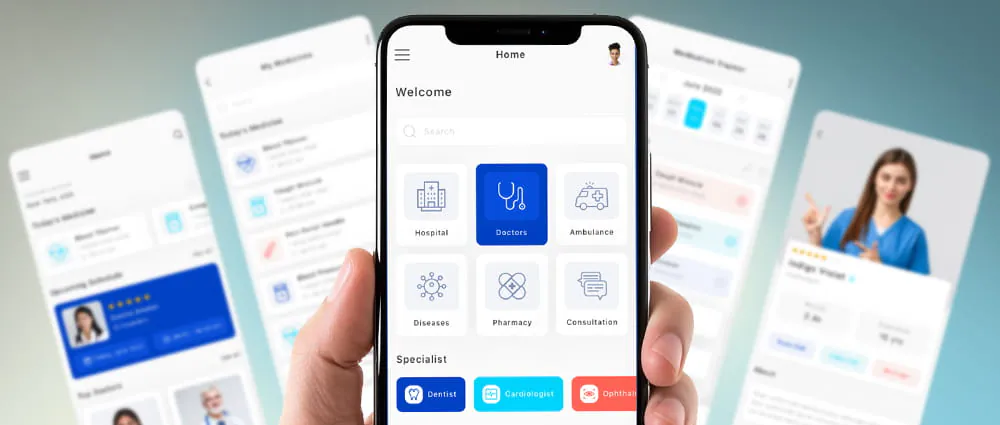
Telemedicine has transformed the way healthcare is delivered around the world. Instead of driving to an office and sitting in a waiting room, patients now sit in the comfort of their homes and connect with healthcare providers online. From small clinics to large hospital networks, telemedicine software providers help healthcare teams reach more patients, increase practice efficiency, and improve health outcomes.
In fact, recent data shows that telemedicine usage rose significantly during the pandemic, with around 37 percent of adults reporting they used telehealth services in 2021, compared with just 11 percent in 2019. This dramatic rise shows how fast telemedicine has become part of routine care.
This guide breaks down everything you need to know about telemedicine software in 2026: what it is, how it works, the core benefits, important features, how to implement it, challenges providers face, and the top 21 telemedicine platforms worth considering.
Telemedicine software is a special digital system that allows for the provision of medical care from a distance between patients and healthcare professionals. It combines all the tools necessary for secure communication, such as video appointments, electronic health records, messaging, scheduling, and billing, into a single solution.
Telemedicine software uses common technologies like:
These technologies work together to create a digital environment where care delivery is easier, faster, and more connected.
Telemedicine expands access to healthcare. Patients living in remote areas, those with mobility challenges, and busy individuals now have more ways to access care without travel. Virtual care can lead to better patient compliance and more frequent follow-ups.
Telehealth providers are also not left behind. When health operations go digital, we already know that patients benefit, but there are huge gains for the providers and hospital staff as well. These advantages include:
These benefits help both clinicians and patients have smoother, more satisfying experiences.
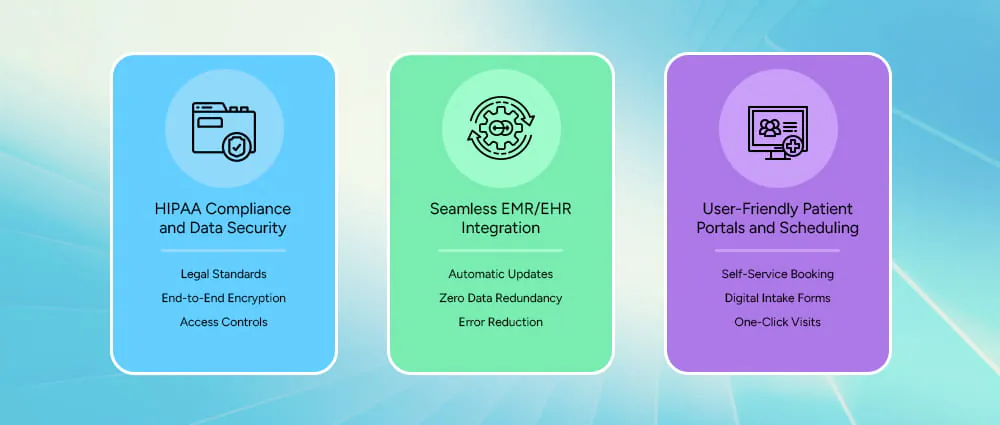
When you’re developing a Telemedicine app, there are a few mandatory healthcare-related requirements that must be included in the software, and we can’t skip them at any cost.
Telemedicine platforms must protect health data according to legal standards, including encryption and secure access controls. Providers must choose systems that meet privacy regulations to ensure patient trust.
Integrating telemedicine with EHR systems means that patient records update automatically. Providers don’t need to enter data twice, which reduces errors and improves efficiency.
Good telemedicine platforms let patients self-book appointments, complete intake forms online, pay bills, and join visits without technical headaches. This improves adoption and satisfaction.
Below are the Top 21 telemedicine software providers for 2026. Each review includes what makes the platform unique and how it helps healthcare providers.
Best for Large-Scale Enterprise Integration
Mend is a comprehensive telehealth solution designed for complex enterprises and large practices. It automates administrative tasks such as appointment reminders and patient registration.
This app uses predictive analytics to reduce no-shows and improve patient engagement with automated workflows. Providers can also customize the platform with branding and secure messaging to keep patients informed.
Best for Simple No-Download Access
Doxy.me is among the leading solutions for clinics looking for a simple yet effective telemedicine solution. Patients connect to the appointments via a browser link; no app installation is required.
The service offers video calls compliant with HIPAA, virtual waiting rooms, and basic integration with Electronic Health Records as features. Its user-friendliness is a perfect match for single doctors and small clinics.
The Industry Leader in Virtual Care
Teladoc Health belongs to one of the biggest telehealth software companies worldwide. It provides round-the-clock access to doctors for the different specialties like general medicine, mental health, dermatology, and chronic condition management.
The system has capabilities for advanced analytics, AI-driven risk assessment, and monitoring of patient outcomes. Its worldwide presence and ability to scale up make it suitable for very large hospital chains and telehealth operations at the enterprise level.
Best for Integrated EHR and Billing
athenaOne combines practice management, billing, EHR, and telemedicine into one unified system. Providers already using athenaOne benefit from seamless workflows without needing separate software. It supports scheduling, virtual visits, and billing within one shared environment, which reduces administrative burden and data duplication.
Used for Private Practitioners
SimplePractice is widely used by therapists, counselors, and solo healthcare providers. It combines telemedicine with practice management features like clinical notes, scheduling, billing, and insurance claims. Its focus on user experience and integrated tools helps small practices save time and manage all patient needs in one place.
Best for Patient Communication and Messaging
Klara is the one who offers the best communication tools for patients. Besides providing video calls, the company has secured its communication with messaging, reminders, and patient engagement. The features of Klara lead to conversations among the three parties: doctors, staff, and patients. The unified inbox of Klara diminishes phone calls and, at the same time, increases the speed of replies.
The Software for Flexible Workflow Customization
eVisit is a provider of software for telemedicine that allows its users to customize the workflows to their liking. Among the extra features are virtual waiting rooms, advanced scheduling, and support for complex cases in academic or multi-specialty practices. eVisit is flexible enough to keep up with the changes in the practice and even the growth.
Best for Remote Patient Monitoring
AMC Health is the company that specializes in remote patient monitoring (RPM) plus telehealth visits. They put patients’ wearable devices connected to providers’ dashboards that help doctors monitor vital signs and even see the trends over time. This attribute is very effective in taking care of chronic patients like diabetics and those with heart diseases.
Best for Low-Bandwidth and Rural Areas
swyMed delivers reliable telemedicine performance even with limited internet speeds. It works in low-bandwidth environments, making it valuable for rural clinics and global health providers. It supports secure video, messaging, and device integrations.
Go for This if You Have Multi-Specialty Clinics
VCDoctor is a versatile telehealth system accommodating various specialties under a single umbrella. It encompasses online appointment setting, secure video conferencing, virtual waiting areas, and payment processing for patients. Clinics that offer varied services gain the most from their flexibility.
Ideal for Behavioral Health Experts
SecureVideo is the product of a security and ease of use ceiling. It offers HIPAA-licensed video visits, secure messaging, and appointment tools. Psychologists and counselors, who work in the field of behavioral health, value its user-friendliness and privacy features.
The Most Secure Document Sharing and Faxing App
Updox is a powerful all-in-one communication platform built to simplify how healthcare teams talk to patients and share medical information. It supports secure telemedicine visits, encrypted messaging, eFax, and document sharing, all from one dashboard. This means doctors and staff no longer need to switch between multiple tools to send lab reports, prescriptions, or patient forms.
What makes Updox especially valuable is its ability to connect with over 100 EHR systems. This allows clinics to send and receive medical records directly from their existing software without printing, scanning, or manually uploading files. For busy practices, this saves time and reduces errors. Patients also benefit because they receive their test results and documents quickly and securely, which improves communication and trust.
Best for Collaborative Care
NextGen Virtual Visits is designed for healthcare teams that work together to treat patients. It allows doctors, nurses, specialists, and care coordinators to join virtual visits or share patient information in real time. This team-based approach helps ensure that everyone involved in a patient’s care stays on the same page.
The platform integrates virtual visits directly into clinical workflows, so providers can review patient records, write notes, and create treatment plans without leaving the system. Shared documentation makes it easier to coordinate care, especially for patients with complex or long-term conditions.
Best for Mental Health Practice Management
TheraNest is built specifically for therapists, counselors, and mental health clinics. It combines secure telemedicine with tools for scheduling, note-taking, billing, and client management. This allows mental health professionals to focus more on their clients instead of paperwork.
The platform also supports group therapy sessions, progress tracking, and outcome reporting. These features help therapists understand how their patients are improving over time and adjust treatment plans when needed.
Never Misplace Your Clinical Documentation
TherapyNotes is a favorite among counselors and mental health providers who want to keep their records organized and easy to access. It simplifies clinical documentation by offering structured templates for session notes, treatment plans, and progress reports.
It also includes secure telemedicine, online scheduling, and integrated billing, which means therapists can manage their entire practice from one system. With everything stored safely in one place, providers can spend less time on administration and more time caring for their patients.
Best for Behavioral Health EHR
Valant EHR Suite caters to behavioral health practices of all sizes. It includes powerful clinical documentation, scheduling, billing, and telemedicine features designed for psychiatric and therapy practices. Its data-rich dashboards help clinicians monitor outcomes and practice trends.
Best for High-Security Video Consultations
Healthie focuses specifically on secure, encrypted video sessions. Providers who want top-tier privacy for sensitive consultations, such as psychiatry or addiction medicine, find this platform especially useful. It supports virtual waiting rooms and secure file sharing.
The App for Specialized Medical Groups
Secure Telehealth delivers telemedicine tools tailored to specialized clinical groups. It offers customizable security settings, virtual visit templates, and clinical workflow support. Specialists who require specific documentation and visit types benefit from its custom features.
Best for Scaling HIPAA-compliant virtual care solutions
VSeeHealth is an adaptable telehealth and digital health platform that accelerates the development and expansion of virtual care systems in healthcare organizations. The platform provides secure HD video visits, remote monitoring, scheduling, and billing, among other things, thus being appropriate for hospitals, health systems, and specialty practices. The company has over 1,000 clients globally and processes more than 1.5 million HIPAA-compliant video encounters monthly, indicating its capacity to provide services at scale across urgent care, primary care, mental health, and intensive care.
Bring Discipline with This Healthcare Workforce Scheduling App
Deputy is focused on scheduling and workforce management for healthcare teams. While not a traditional telemedicine tool, it supports virtual care planning by ensuring providers are scheduled efficiently for online and in-person shifts.
Best for High-Definition Video Quality
BlueJeans Telehealth by Verizon provides high-definition video conferencing optimized for medical consultations. It includes secure messaging, appointment reminders, and integration with scheduling systems. Its video quality makes it excellent for clinical assessments that require clear visual communication.
Providers use telemedicine for general appointments such as colds, follow-ups, wound checks, and medication reviews. Many chronic illness check-ins, like blood pressure and diabetes, can be done safely without in-person visits.
Telemedicine is also used for ongoing care of conditions like asthma, cardiac care, and postoperative monitoring. Remote monitoring tools share patient data with providers, allowing early intervention and better outcomes.
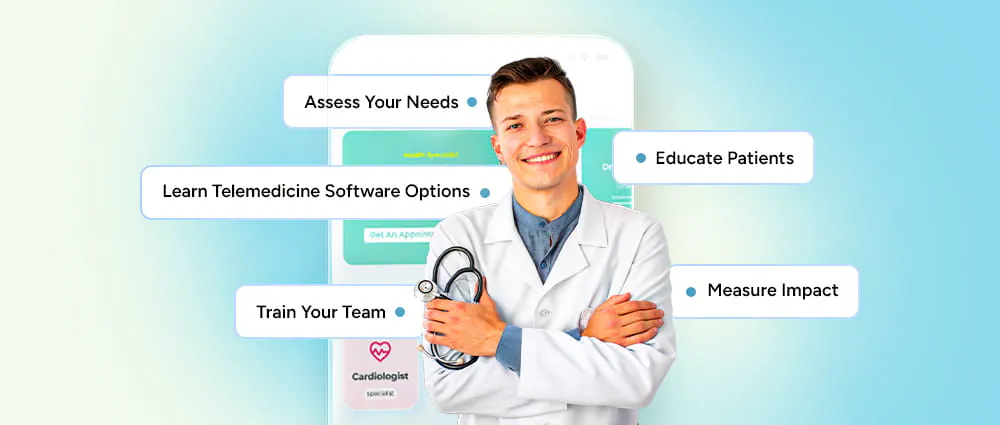
A Step-by-Step Guide to Telemedicine Software Solutions. This is what you’re going to need when you implement telehealth software features in your business.
In case your practice calls for one-of-a-kind workflows, superior integrations, or personalized branding, it would be wise to partner with a reputable telemedicine software development firm such as Arpatech.
Arpatech and similar companies develop telemedicine software solutions that are completely customized according to the client’s clinical and operational requirements, hence assuring seamless integration with EHR systems, patient portals, billing tools, and remote monitoring technologies.
This method provides health care professionals with more freedom, better growth, and a platform that suits their practical work processes rather than putting them into strict, off-the-shelf systems.
Providers must understand rules related to licensing, telehealth reimbursement, and data privacy in their region. Regulations vary between states and countries, making compliance complex.
Technical issues like poor internet connections, lack of patient technology skills, and device limitations can hinder telemedicine use. Providers must offer guidance and alternatives to improve access.
Selecting the right telemedicine software for providers depends on your goals, your patients, and how your practice works. Whether you need a basic video platform, a full EHR system, or a custom telemedicine solution, the platforms listed above are among the best options for 2026.
If you need something more personalized, Arpatech provides telemedicine software development services, including custom platform building, system integration, and ongoing technical support to help healthcare providers run virtual care smoothly.
Telehealth uses specialized systems like video conferencing, patient portals, EHR integrations, secure messaging, and remote monitoring tools designed specifically for healthcare.
Telemedicine software improves access, reduces wait times, enhances patient experience, and increases provider efficiency.
Telemedicine can provide urgent care, chronic disease management, therapy, follow-ups, behavioral health, and preventive medicine.
Patients need a device with a camera, internet access, and instructions on how to use the telemedicine platform.
By reducing administrative work, lowering no-show rates, and offering flexible scheduling, telemedicine helps practices serve more patients with less strain.
No. Providers must use secure, HIPAA-compliant telemedicine platforms designed for medical use to protect patient privacy and follow regulations.

Before we begin, please solve this quick math check to confirm you're human, and you'll be all set to start chatting with our AI assistant.
Stay connected with us to receive the latest information, updates, and insights from our world of innovation.
By entering your email address you will receive promotional updates.


© 2026 ARPATECH (ADVANCED RESEARCH PROJECTS & TECHNOLOGY)