Every startup needs technology to succeed. IT supports growth, agility, and resilience through secure networks and scalable systems. Founders must understand managed IT services pricing, cost structures, and potential ROI to make smart IT decisions. For startups aiming to grow and compete in the US innovation ecosystem, understanding managed IT services costs is essential.
This knowledge becomes even more critical as startups continue to secure substantial funding. In the first half of 2025, US startup funding increased by over 75%, due to growing interest in AI and tech companies, and is expected to continue this growth in 2026. As funding increases, startups need to scale securely and efficiently. This makes planning for IT investments and costs a top priority.
In this guide, we’ll explore:
Technology drives scalability, efficiency, and innovation in startups. From streamlining workflows to ensuring secure data management, IT forms the backbone of modern operations. Recognizing the importance of IT in startup success helps founders prioritize spending on solutions that maximize ROI.
Managed IT services involve outsourcing your help desk, IT operations, network monitoring, updates, backups, and cybersecurity to a specialist provider (MSP). This gives you enterprise-level support without the overhead of in-house infrastructure.
Key factors behind IT managed services pricing include:
In US, competition and evolving standards in hubs like Silicon Valley, New York, and Austin force providers to remain competitive while ensuring sustainable pricing.
Several factors influence the rates charged for managed IT services:
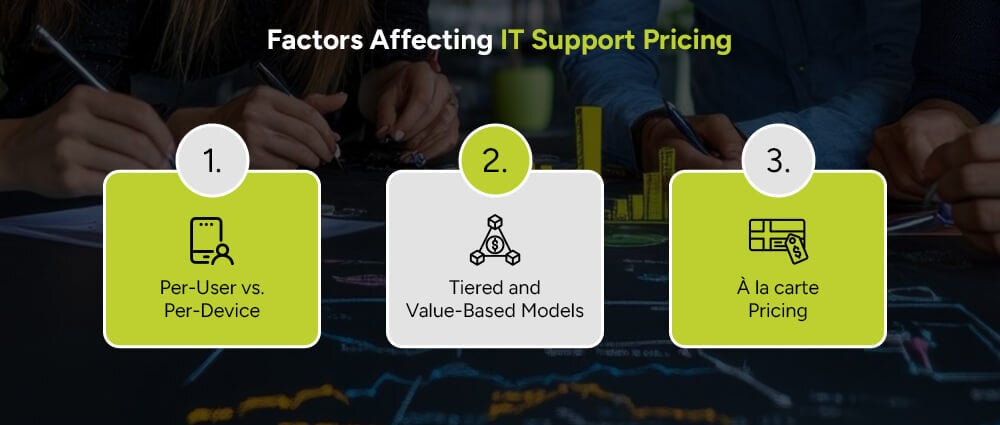
Cost may be based on the number of users or the number of workstations/servers.
Packages labeled as “basic” or “premium” help simplify the selection process.
Just pick and pay for what you need, which is helpful if you want flexibility.
To summarize the key influencers on pricing, Support, and Remote managed IT services:
A helpful tool is the managed IT services pricing calculator. You can use it to enter important information like the number of users, types of devices, (SLA), and support hours. This helps you estimate IT costs before you make a decision. These calculators are helpful for startups to create budgets and plan their strategies. In the US, the IT outsourcing market is projected to reach around USD 218 billion in 2025, highlighting the scale of IT services demand and why cost clarity matters for startups allocating precious funding.
With such a large and growing ecosystem of managed services and outsourcing, having budget clarity helps you stay proactive and competitive as you plan IT spend.
When startups think of Managed IT Services, cost savings are usually the first thing that comes to mind. But the real value goes far beyond just saving money; it’s about creating a smoother, smarter way to run your business.
Your in-house team can shift its focus from addressing IT issues to activities that promote growth, such as product development, staying up to date with software trends, marketing, and innovation. This allows for less distraction and more energy devoted to bringing your vision to life.
Managed IT providers offer specialists who understand security, compliance, and US industry standards, including Healthcare IT support and retail technology operations. You don’t need to hire multiple experts; instead, you gain access to their skills on demand, ensuring your tech operations are not only functional but also built for growth.
Managed IT services allow you to avoid unexpected repair bills and surprise upgrades by charging a fixed monthly fee. This makes it easier for startups to plan their budgets and reduces the risk of sudden financial stress when budgets are constrained.
In fast-moving startup environments, every minute of downtime can mean lost opportunities. Managed IT services provide regular monitoring, quick problem resolution, and flexible options, keeping your business running smoothly when customers need it most.
While achieving operational efficiency is a significant advantage, the actual value of managed IT services lies in the return on investment (ROI).
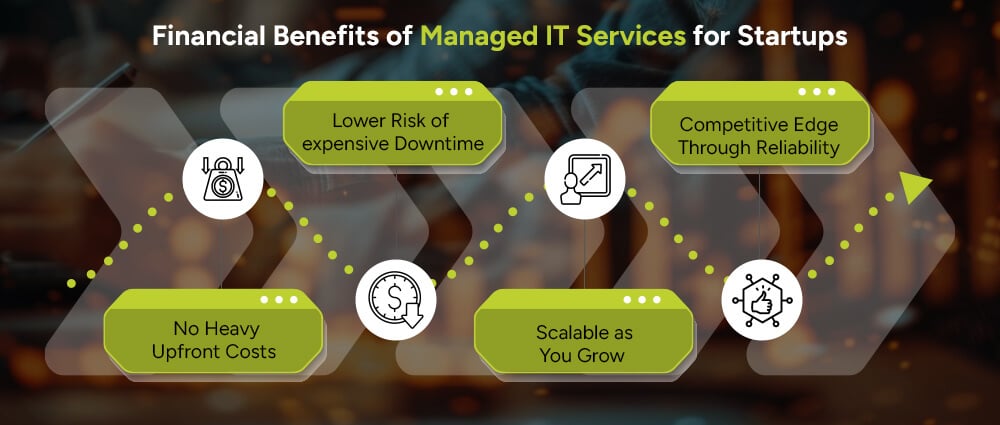
Skipping significant expenses on servers, software, or full-time IT staff lets you invest in high-impact areas that boost growth, like marketing or product upgrades.
Downtime can disrupt your work and damage your reputation. Managed IT services help you avoid technical problems before they happen. This reduces unexpected repair costs and helps keep your revenue steady.
Whether you’re onboarding new employees or expanding into a new market, your IT services can be adjusted on demand, removing the need to renegotiate contracts or purchase additional hardware.
Startups that operate efficiently, maintain security, and respond quickly to market changes gain a clear competitive edge. Being reliable helps you gain trust from customers and investors. This trust can help you stand out in a rapidly evolving market.
Market Insight: In US, the IT services outsourcing market, including managed IT services, is estimated to reach about USD 218 billion by 2025, underscoring the extent to which US businesses rely on outsourced technology support to drive efficiency and growth. This rapid expansion reflects strong demand for scalable, expert‑led IT solutions that help companies control costs, innovate faster, and focus on core objectives.
Startups can estimate ROI using a Managed IT Services ROI calculator. Here’s what to compare:
Most of these calculators aren’t publicly available, but many MSPs include cost-benefit templates or ROI tools in their proposals to help you see the value before committing.
Ask your managed IT services provider these questions:
For US small businesses and startups, every dollar counts. Prioritizing IT budget optimization does more than save money:
Whether you’re in fintech, retail, or medical practice, managed IT support costs in US can vary significantly based on various factors, and there isn’t a one-size-fits-all price. Your total investment will depend on several key elements:
The more users, devices, and systems you have, the more support you’ll need. A small team with a few laptops is easier to manage than a growing organization with multiple offices, mobile devices, and specialized infrastructure. Naturally, larger and more complex environments require greater resources and support.
Managed IT services can range from basic help desk support to comprehensive solutions that include cybersecurity, cloud migration, infrastructure management, data backups, and regulatory compliance. The broader the scope of services, the more expertise and ongoing management you will receive from your provider.
IT service providers offer businesses a range of pricing plans. These include per-user or per-device plans, flat-rate packages, tiered options, and fully customizable solutions. Your startup can choose the model that fits your budget and day-to-day operations. Choosing the right plan ensures you get the services you need without paying for extras you don’t.
Ultimately, the “right” cost is the one that aligns with your operational needs, security requirements, and growth plans, while delivering measurable ROI and long-term value.
Managed IT services pricing, IT consulting services, and outsourced IT services are not only support services that help your business, but they are valuable tools that allow you to scale and enable you to focus on your core startup operations. Using tools like the managed IT services pricing calculator, understanding the factors that affect IT support pricing, and calculating ROI with the Managed IT Services ROI Calculator can help you appreciate the role of IT in startup success.
With operational advantages beyond cost savings and financial benefits clearly outlined, the strategic move for startups is to prioritize IT budget optimization. This ensures your venture grows on solid, scalable ground. With IT help desk support specialists at Arpatech, your startup can get the support you require to get ahead of early competition, so let’s have that early meeting.
When evaluating managed IT services pricing, businesses should consider:
Arpatech provides comprehensive managed IT support services, including:
The ROI of managed IT services comes from both cost savings and operational efficiency:
Yes, Arpatech offers fully customized IT support solutions for small businesses and startups.


Before we begin, please solve this quick math check to confirm you're human, and you'll be all set to start chatting with our AI assistant.
Stay connected with us to receive the latest information, updates, and insights from our world of innovation.
By entering your email address you will receive promotional updates.


© 2026 ARPATECH (ADVANCED RESEARCH PROJECTS & TECHNOLOGY)